China–Korea Cooperative Program · School of Pharmacy
Training in biopharmaceutical sciences, molecular biology, and quantitative approaches to scientific problems.
Ranked 1st / 442022-2023 Chinese National Scholarship
Sept. 2025 — Present
The Chinese University of Hong Kong, Shenzhen
Master of Philosophy in Biological Sciences
School of Medicine
Investigate the molecular mechanisms of ferroptosis-protective compounds using cell-based assays and animal models.
MPhil StudentRanked 3rd / 19
Beyond research, building community. Building spaces for ideas to grow.
JILIN MEDICAL UNIVERSITY
The Hongzhi Program
Student Mentor · Founding Cohort
I founded and implemented the inaugural Hongzhi Program with faculty members, supporting outstanding first-year students through academic mentorship, learning strategies, and early research training. The first cohort went on to earn academic honors and develop preliminary research outcomes.
CUHK-SHENZHEN
Graduate Student Union
Vice Minister · Academic Department
I helped establish the union’s academic service framework, supported university seminars and academic events, and represented the GSU in external academic exchanges. Through student–faculty communication and peer support, I helped graduate students navigate academic challenges.
BIO1001Teaching photos to come
TEACHING & LEARNING
General Biology
Teaching Assistant · BIO1001 · CUHK-Shenzhen
I supported undergraduate biology teaching and a faculty-led education reform project, contributing to diagnostic assessments, retrieval practice, adaptive tutorials, and progressive inquiry-based activities that develop conceptual understanding and independent scientific thinking.
Questions first. Disciplines follow.
I follow scientific questions across disciplinary boundaries, combining experimental biology with quantitative reasoning.
Life Sciences
2025
Natural products & redox biology
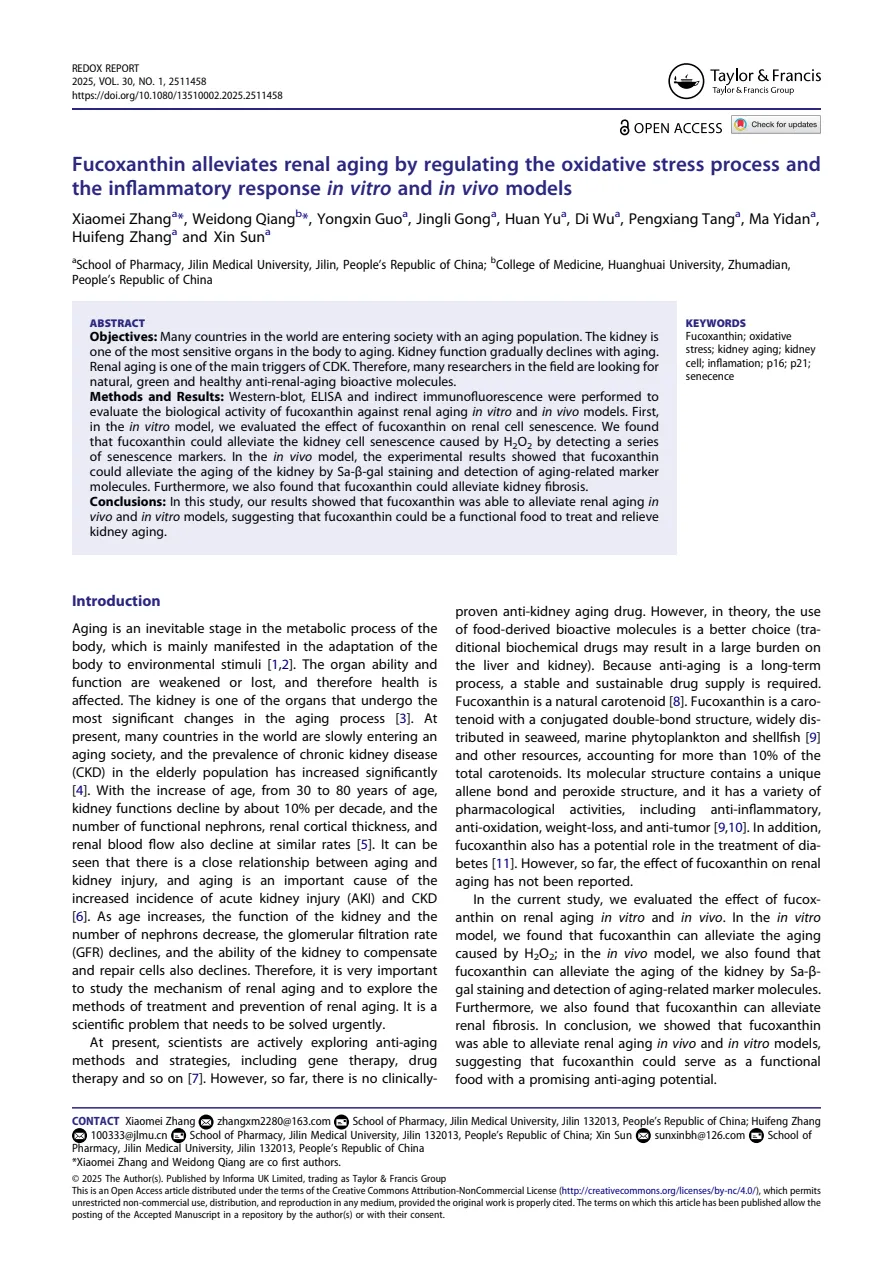
Investigating how fucoxanthin modulates oxidative stress, inflammatory signaling, and cellular senescence in experimental models of renal aging.
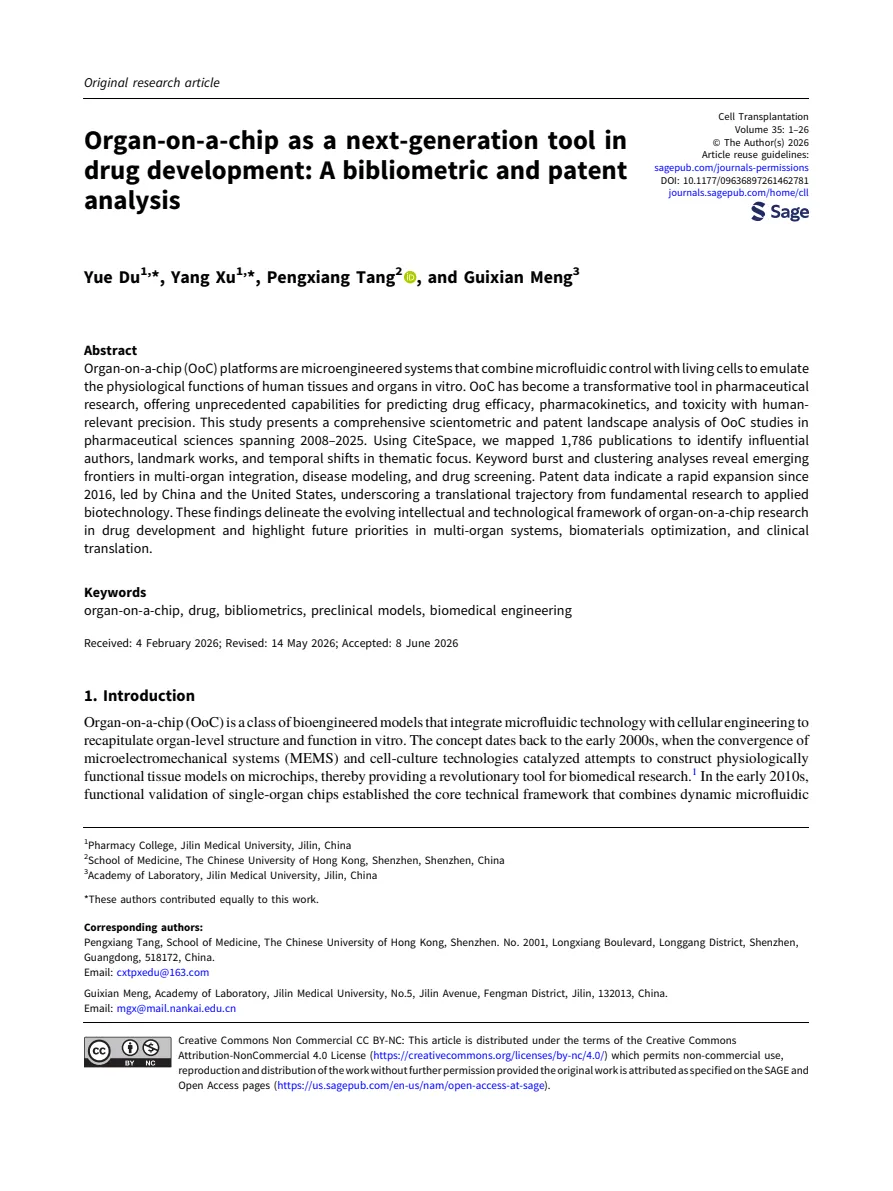
Investigating the role of organ-on-a-chip technologies in drug discovery, efficacy assessment, toxicity testing, and translation toward human-relevant pharmacology.
Investigating small-molecule protection against ferroptosis and the redox mechanisms linking antioxidant systems, lipid peroxidation, and cell survival.
Research in progress
Mathematical Modeling
2022
Prediction & planning
Developing quantitative forecasting models for elderly-care bed demand to support capacity planning and resource allocation in pension services.
Fucoxanthin alleviates renal aging by regulating the oxidative stress process and the inflammatory response in vitro and in vivo models
Zhang X, Qiang W, Guo Y, Gong J, Yu H, Wu D, Tang P, Yidan M, Zhang H, Sun X.
I explored whether fucoxanthin, a natural marine compound, could counter kidney aging associated with oxidative stress and inflammation. Working with my co-authors, we examined cellular senescence and aged-animal models using protein analysis, immunoassays, fluorescence imaging, and tissue staining. We found that fucoxanthin alleviated senescence and fibrosis alongside improvements in oxidative stress and inflammatory responses. These preclinical findings support further investigation of natural products as modulators of age-related kidney damage and connect redox biology with mechanism-oriented pharmacological research.
Organ-on-a-chip as a next-generation tool in drug development: A bibliometric and patent analysis
Du Y, Xu Y, Tang P, Meng G.
I asked how organ-on-a-chip research is evolving, and where scientific advances are becoming practical technologies for drug development. With my co-authors, we combined CiteSpace-based bibliometric mapping with patent analysis to examine influential work, research clusters, and emerging themes. We identified a growing emphasis on multi-organ integration, disease modeling, and drug screening, alongside expanding technological activity. For me, the study provides a map of the field’s development and highlights multi-organ systems, biomaterials, and clinical translation as priorities for future research.
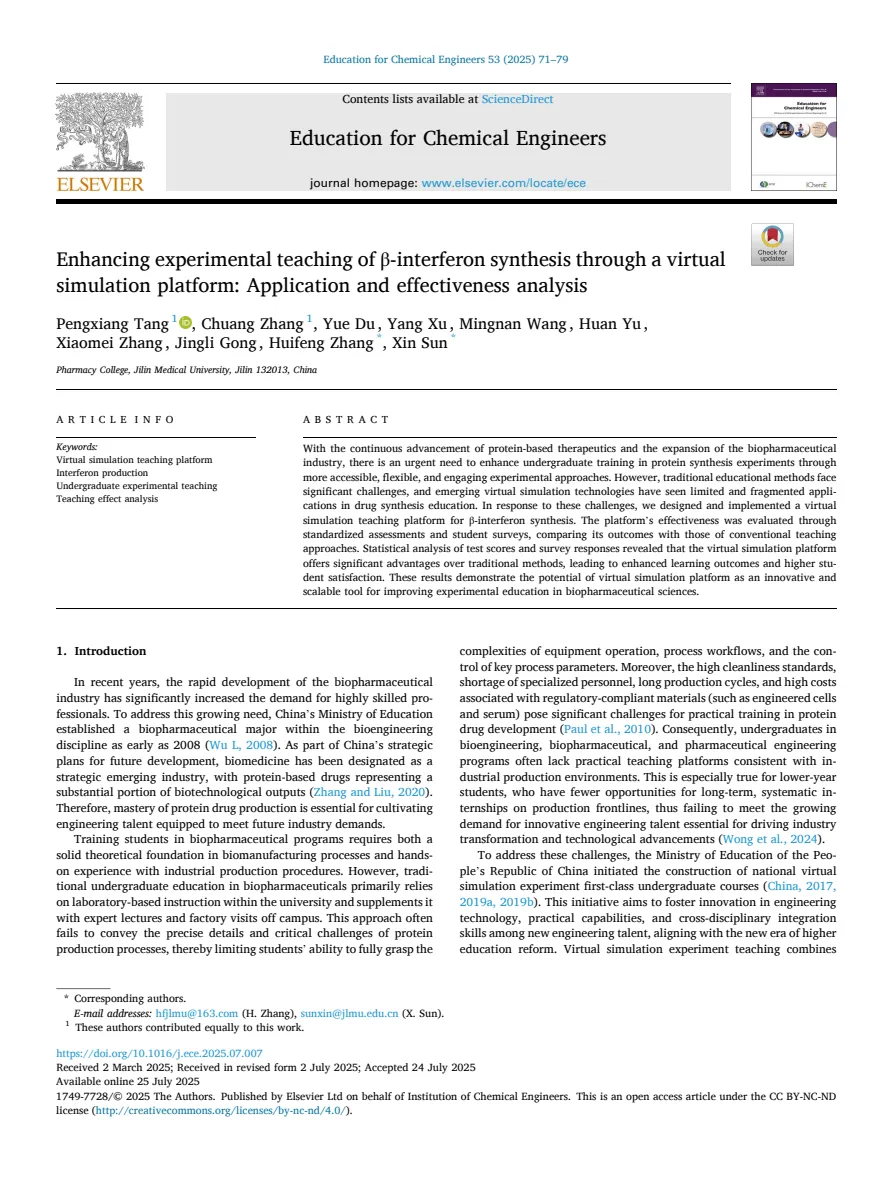
Enhancing experimental teaching of β-interferon synthesis through a virtual simulation platform: Application and effectiveness analysis
Tang P, Zhang C, Du Y, Xu Y, Wang M, Yu H, Zhang X, Gong J, Zhang H, Sun X.
I asked how students could gain more accessible and engaging experience with protein synthesis when conventional laboratory teaching faces practical constraints. With my co-authors, we designed and implemented a virtual platform for β-interferon synthesis, then compared it with conventional teaching through standardized assessments and student surveys. The evaluation indicated improved learning outcomes and greater student satisfaction. I see the platform as a scalable approach to blended biopharmaceutical education, helping connect theoretical knowledge with experimental learning.
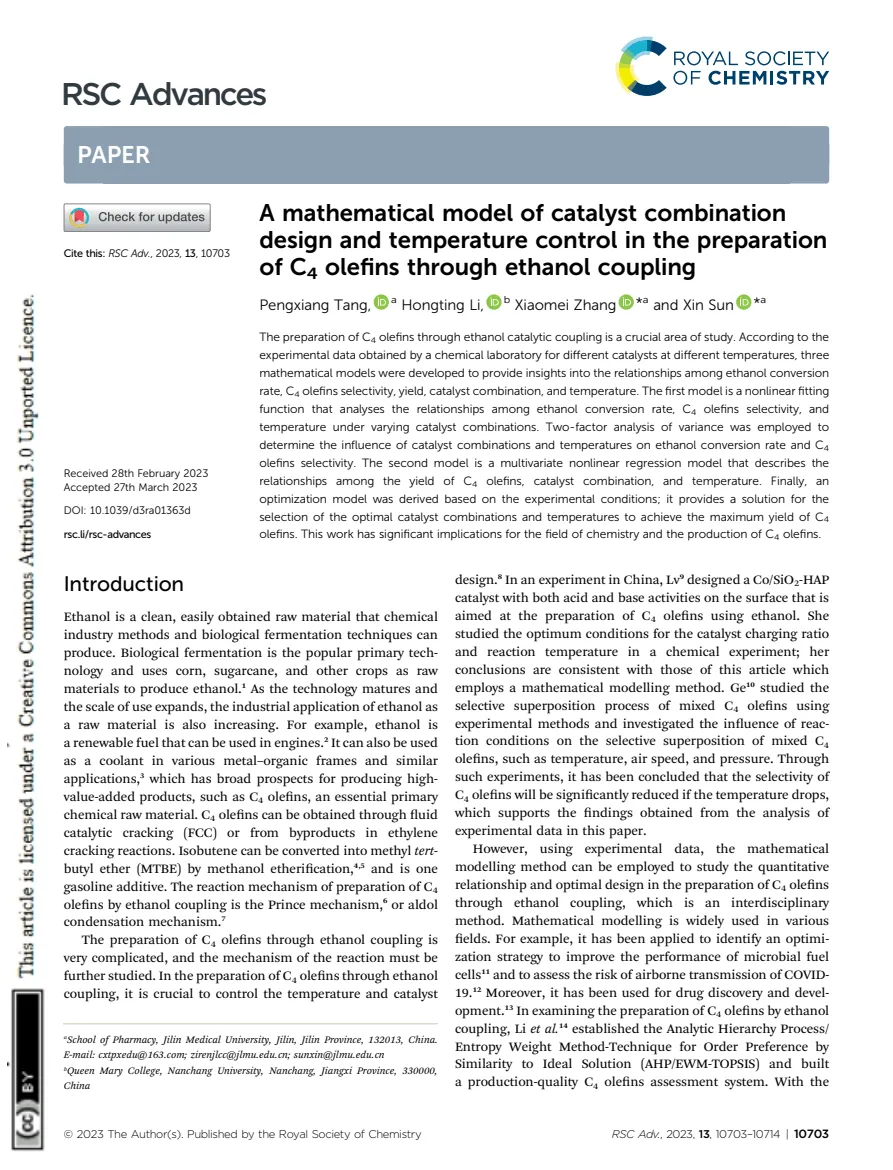
A mathematical model of catalyst combination design and temperature control in the preparation of C4 olefins through ethanol coupling
Tang P, Li H, Zhang X, Sun X.
I investigated how catalyst combinations and reaction temperature jointly shape the production of C₄ olefins from ethanol. With my co-authors, we used nonlinear fitting and analysis of variance to examine conversion and selectivity, then combined multivariable regression with constrained optimization to identify favorable operating conditions. The models linked experimental observations to actionable choices about catalysts and temperature. I see the contribution as a quantitative decision framework for planning catalytic experiments and improving process yield within the conditions represented by the data.
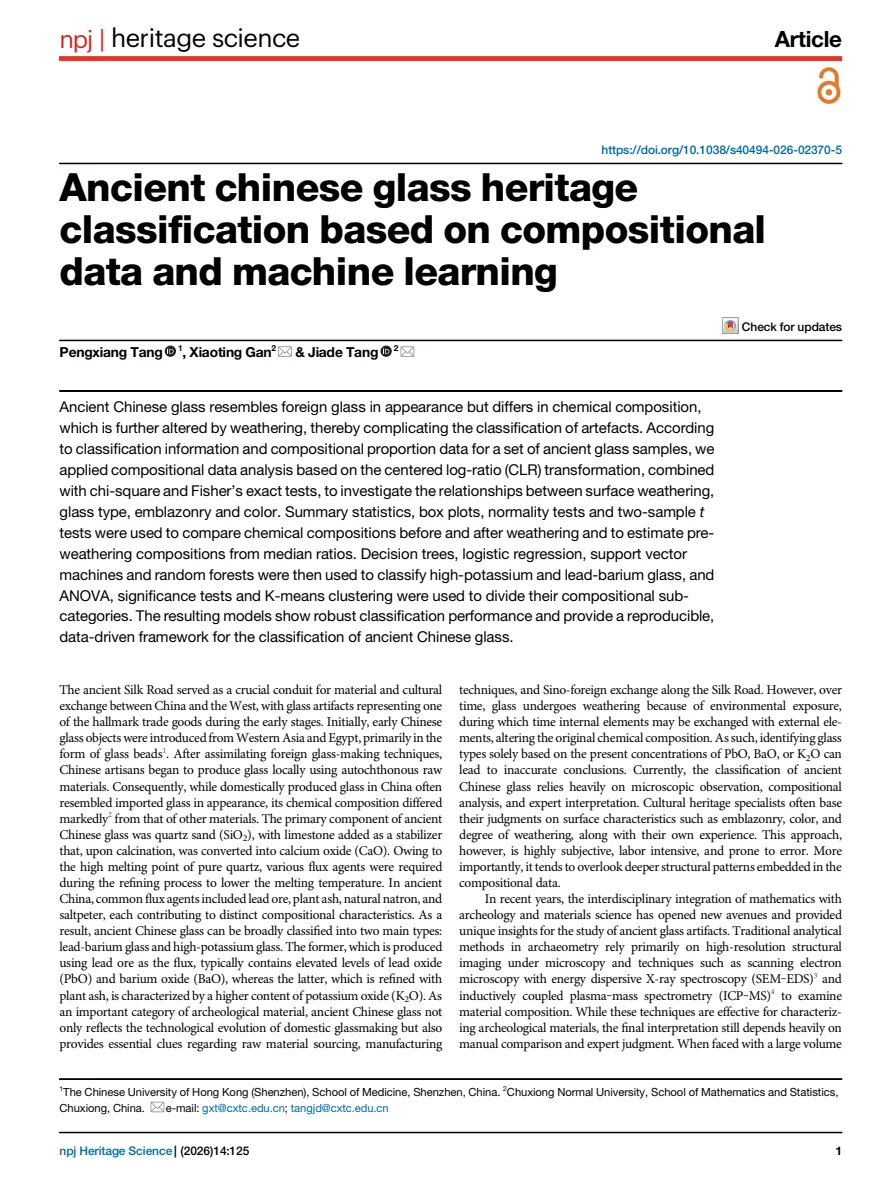
Ancient Chinese glass heritage classification based on compositional data and machine learning
Tang P, Gan X, Tang J.
I asked how ancient glass can be classified reliably when weathering alters its chemistry and composition measurements are constrained proportions. With my co-authors, we used centered log-ratio transformation and statistical tests to examine compositional patterns, then compared machine-learning classifiers and explored subgroups through clustering. Our models distinguished high-potassium from lead–barium glass and supported a reproducible classification framework. The broader lesson I draw is that useful prediction begins with respecting the structure of the data, creating a stronger bridge between quantitative methods and cultural heritage research.